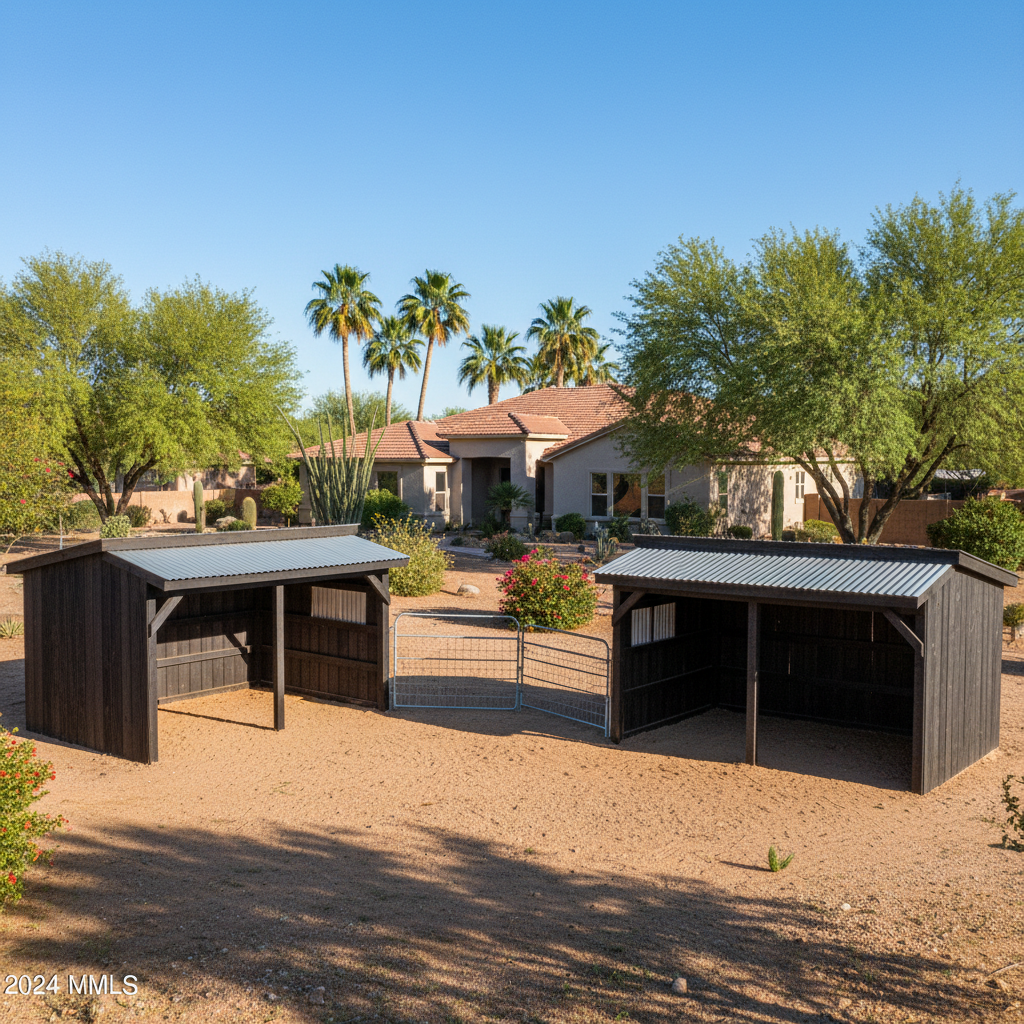
Got animals? Need to keep 'em safe and comfy? Here in Scottsdale, that's not always as easy as just throwing up a lean-to. Our desert climate, with its brutal summer sun and monsoon downpours, really demands more from a livestock shelter than what you'd find in, say, a wetter, cooler state.
I've built a lot of structures around here, everything from backyard sheds to full-on workshops. When it comes to livestock shelters, though, there are a few things I always tell folks to keep in mind. It's not just about putting a roof over their heads; it's about smart design and tough materials that can actually handle what our Sonoran Desert throws at us.
Why Scottsdale's Climate Changes Everything
Our weather isn't just hot; it's intensely dry for most of the year, then suddenly humid with violent storms during monsoon season. That's a huge factor for any outdoor structure, wouldn't you agree? You can't just slap up any old lumber or roofing and expect it to last. The sun here bakes everything, fading colors, cracking wood, and degrading plastics at an alarming rate. Then, when the rain does come, it often comes down in buckets, sometimes with hail, and the wind can really whip through.
Think about it: a shelter for horses, goats, or chickens needs to provide serious shade. Not just a little dappled light, but deep, consistent shade that keeps the inside temperature down. We're talking about 115-degree days, sometimes for weeks on end. That kind of heat stress is no joke for animals.
Then there's the dust. Our soil, especially in areas like the McDowell Mountain foothills, is often sandy and dry. Winds kick up a lot of dust, and you want a shelter that can protect animals from that too. Good ventilation is key, but you also need to consider how to keep fine dust from settling everywhere.
Common Projects I See Around Here
Around Scottsdale, especially in the more rural or semi-rural areas like those out past Pima Road or up towards Cave Creek, I get calls for a few common types of livestock shelters:
- Horse Barns and Run-Ins: These are probably the most frequent. People want a safe, shaded space for their horses to get out of the sun or rain. A good run-in needs to be oriented correctly to maximize shade throughout the day and protect against prevailing winds.
- Goat and Sheep Shelters: Often smaller, but they still need to be robust. Goats are notorious for testing the limits of any structure, so sturdy construction is a must.
- Chicken Coops: Not just a little box, but a well-ventilated, predator-proof structure. We've got plenty of coyotes, bobcats, and even javelina that would love an easy meal.
- Multi-Purpose Animal Sheds: Sometimes folks have a mix of animals and need a flexible space that can be sectioned off or adapted.
The key for all of these? Build them right the first time. You don't want to be patching up a flimsy structure after the first big windstorm or realizing your animals are still overheating in July.
Materials That Make a Difference
When we're talking about materials, I always lean towards durability and low maintenance. Here's what I recommend:
- Roofing: Metal roofing is usually my go-to. It reflects heat better than asphalt shingles, lasts longer in our sun, and handles hail and heavy rain like a champ. Plus, it's easier to clean.
- Framing: Pressure-treated lumber for anything touching the ground is non-negotiable. For the rest, good quality dimensional lumber, properly braced, is essential.
- Siding: Smart siding or T1-11 with a good paint job holds up well. You want something that can take a beating from the elements and from the animals themselves.
- Foundations: A solid concrete slab or sturdy skids are important. You don't want your shelter shifting or settling unevenly over time, especially with our expansive clay soils in some parts of the Valley.
And ventilation. I can't stress that enough. Ridge vents, soffit vents, and even strategically placed windows or openings (with predator-proof screening, of course) are crucial for airflow and keeping things cool.
Why Local Expertise Matters for This Kind of Work
Look, anyone can build a box. But building a livestock shelter that truly performs in Scottsdale? That takes local knowledge. I've been doing this for years, and I understand the specific challenges we face here. I know which materials stand up to our sun, how to design for maximum shade and airflow, and what kind of foundation works best with our local soil conditions.
When you work with a local outfit like Custom Sheds of Scottsdale, you're not just getting a builder; you're getting someone who understands your property, your animals, and our unique environment. We're not guessing; we know what works. We'll talk through your needs, look at your property, and make sure you get a shelter that's going to keep your animals safe and comfortable for years to come, without you having to worry about it falling apart in the next monsoon.