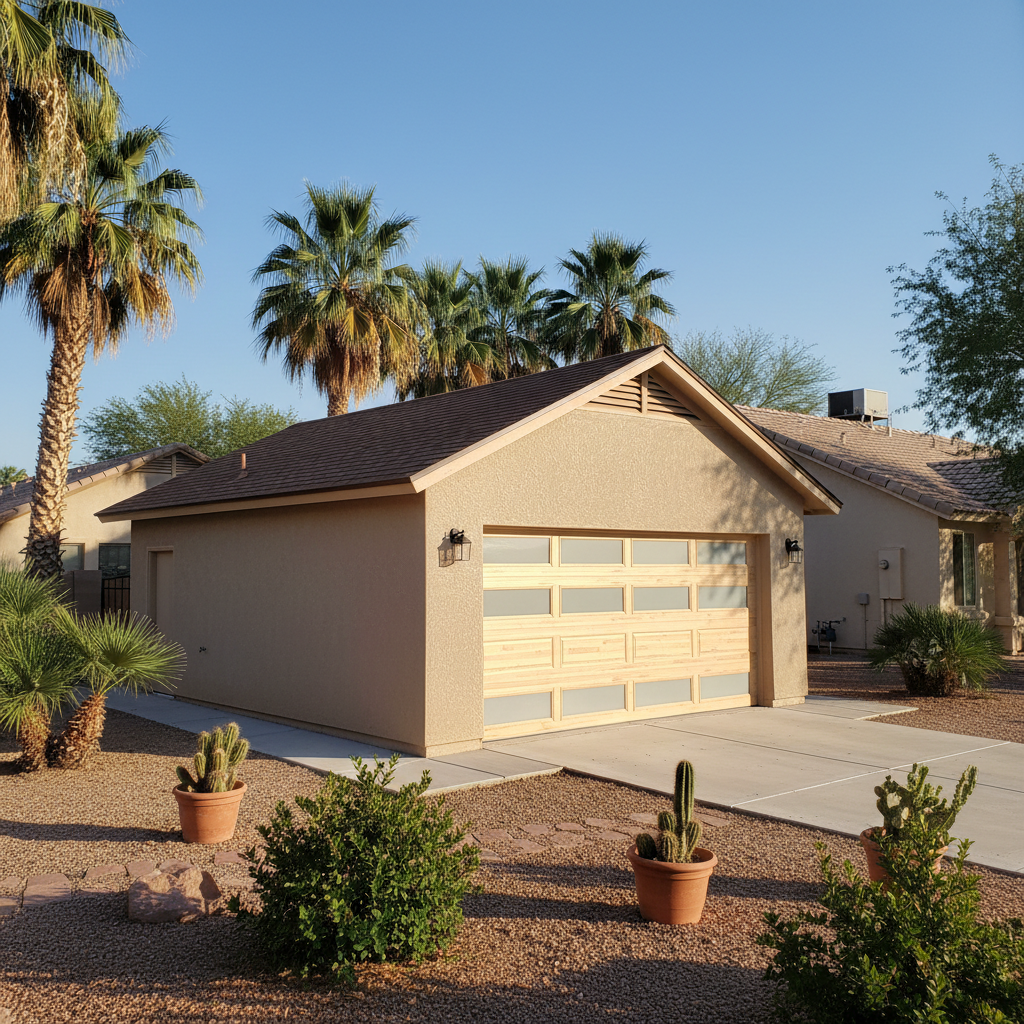
What Does a New Garage Really Cost in Scottsdale?
Alright, let's get down to business. You're thinking about a new garage, and naturally, you're wondering what it's going to cost you. It's not a simple "A or B" answer, but I can give you some solid figures based on years of building right here in Scottsdale. Forget those national averages you see online; they just don't factor in our specific labor costs, local material prices, or the occasional permitting headaches we run into.
For a basic, detached two-car garage – picture a 20x20 foot space, nothing fancy, just a sturdy building with a concrete slab, standard framing, siding that matches your house, a couple of windows, and an overhead door – you're typically looking at a starting price around $35,000 to $50,000. That's for a pretty straightforward build. If you're considering an attached garage, it can sometimes be a bit less per square foot because it shares a wall and roofline with your existing home. But then, you've got to deal with tying into existing utilities and the house's structure, which adds its own set of complications, doesn't it?
Go bigger, or add more features, and that price jumps up fast. A three-car garage, or even a two-car with extra storage (like 24x30 feet), could easily push you into the $55,000 to $80,000+ range. And if you're dreaming of a custom workshop, an ADU above, or really high-end finishes, well, the sky's the limit there, but expect to start north of $100,000.
What Makes the Price Tag Jump (or Drop)?
A few key things really decide what you'll pay. It's not just the size, though that's a huge piece of the puzzle.
- Size and Dimensions: This one's obvious, right? More square footage means more materials, more labor. But it's not always a straight line. A 20x20 is usually more cost-effective per square foot than a tiny 10x10 because of fixed costs like permits and site prep.
- Foundation: Most garages here in Scottsdale need a good, solid concrete slab. The thickness, whether it's post-tensioned (pretty common with our expansive desert soils), and any special grading needed for proper drainage will all impact the cost. If your lot needs a lot of leveling or retaining walls, that's a significant add-on.
- Materials: Are we talking standard stucco and asphalt shingles to match your existing home? Or do you want a tile roof, maybe some stone veneer, or a specific type of siding? High-end materials cost more, plain and simple.
- Doors and Windows: A basic steel overhead door is one price; an insulated, custom wood-look door with an opener and smart features is another. Same goes for windows – standard vinyl versus energy-efficient, custom-sized units.
- Electrical and Plumbing: Do you just need a couple of outlets and lights? Or are you planning for a sub-panel, 220V for tools, a car charger, or even a utility sink and toilet? Each addition means more wiring, more pipe, and more labor from licensed pros.
- Interior Finishes: Unfinished walls are the cheapest option. Drywall and paint add to the cost. Epoxy floors? Cabinets? A built-in workbench? All extras.
- Site Accessibility: Can a concrete truck and lumber delivery easily get to your build site? If we have to hand-carry materials a long way, or if there are tight turns for heavy equipment, that just adds labor time.
- Permits and Fees: Scottsdale has its own set of rules and fees. These aren't negotiable and are part of every project. Seriously, don't try to skip them; it'll cost you way more in the long run.
What Should a Quote Include?
When you get a quote from a reputable builder, it shouldn't just be one number. You want a detailed breakdown. Here's what I always make sure to include when someone asks Custom Sheds of Scottsdale for a garage quote:
- Detailed Scope of Work: Exactly what we're building, its dimensions, and what materials we'll use for the foundation, framing, roofing, siding, doors, and windows.
- Permit Costs: Clearly itemized.
- Site Preparation: Grading, excavation, debris removal.
- Concrete Work: Slab thickness, rebar, vapor barrier, finish type.
- Framing: Lumber type, wall height, roof pitch.
- Exterior Finishes: Siding, trim, paint, roofing materials.
- Garage Doors: Type, size, opener brand and features.
- Electrical: Number of outlets, switches, light fixtures, panel upgrades if needed.
- Plumbing (if applicable): Any lines run, fixtures installed.
- Cleanup: What's included in the final site cleanup.
- Timeline: An estimated start and completion date.
- Payment Schedule: How and when payments are due.
If a quote is just a few lines or feels vague, that's a big red flag. You need to know exactly what you're paying for.
How to Avoid Overpaying for Your Garage
Nobody wants to feel ripped off. Here's how to make sure you're getting a fair deal:
- Get Multiple Bids: This is a no-brainer. Talk to at least three different, reputable builders. Don't just pick the cheapest; compare what each bid includes. Sometimes a slightly higher bid offers better materials or a more comprehensive scope that saves you headaches later.
- Be Specific About What You Want: The more detailed you are with your vision, the more accurate the quotes will be. Don't just say